1. Select a discrete app icon.








notes
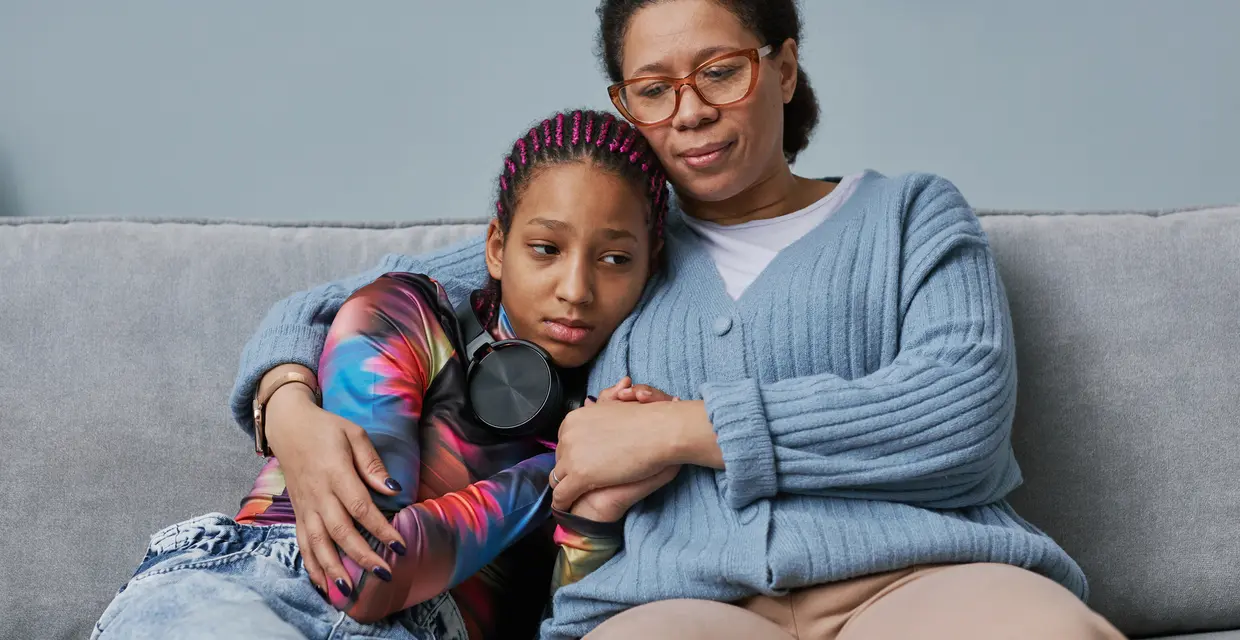
Children experience big feelings. Children who grow up in a home where they experience fear, abuse or unpredictability are likely to have extra trouble managing their own strong feelings. It can be helpful for protective parents and caregivers to learn ways to help children feel safe enough to experience and manage their emotions in a healthy way.
These techniques can potentially make stressful moments easier for both you and your children. A child’s ability to regulate their feelings will likely help them be more successful in school, work, relationships and life. Learning to regain calm when emotions hit their peak is part of developing emotional intelligence, also called social emotional learning. Social emotional learning includes the ability to understand one’s own and others’ feelings, show empathy and make responsible choices.
What does co-regulating look like when the other parent is abusive? Here’s an example:
Your children come home from their father’s house every week all wound up. You know things are chaotic at his house. He makes his children feel like they can’t do anything right. You’ve heard that he’s fighting with his new wife. Your children come home from his parenting time like cans of soda that have been shaken, ready to pop. You feel like you’ve tried everything. You’ve scolded them, sent them to their rooms, tried having “big talks” when they get home or sat them in front of a TV show. Somehow, there always seems to be a lot of yelling or crying until they have settled.
This week, you've thought ahead about how you want to respond. If possible, you've given yourself a few minutes to get grounded before they arrive and have a snack or familiar activity ready for them. You’ve been practicing your own calm. You know not to take it personally if they come in, ready to “go at it” with you.
Children often match or mirror their caregiver’s energy. Try not to let your upset child upset you. This idea takes some getting used to. But if you demonstrate calm and extend your calm like a big warm blanket, your child may come over toward your more peaceful state. This approach won’t work with every child, every time. But it’s worth trying.
If your daughter comes into the kitchen and calls you names, for instance, you can calmly ask her to back off or leave the room until she feels better. You have the right to ask for respect.
Children will often “behave” for the abusive parents and “let loose” when they get home to the parent who makes them feel safe. It feels unfair.
You’re not expected to be a saint! Regulating yourself doesn’t mean you can or should always avoid feeling anger. And it doesn’t mean that you have to simply “take it” if one of your children treats you badly. It’s not good for them, either. But you can try to make deliberate choices about when and how you express your angry feelings to your children, and when you resolve them in some other way.
Co-regulating means that you manage your feelings in such a way that you can model and teach your children how to manage theirs.
Your support gives hope and help to victims of domestic violence every day.
If you do lose your cool and say or do something that you regret, apologize to your children. “I got upset. I wish I had handled myself differently.” Don’t force your children into a hug if they’re not ready, but you can let them know that you’d welcome one when they are. And then do an inventory. Try to make sure you’re getting enough of what you need to be at your best. For starters, this might include friends, rest, nutritious food and exercise.
Parenting is a marathon, not a sprint. Your local domestic violence agency may have a support group for parents in your position, where you can be in community with others who are facing similar challenges.
You’ve heard about putting on your oxygen mask first in case of an emergency, and that’s because it works. If one of your children is upsetting you, take three slow, deep breaths before you respond. Think about your happy place. For me, it’s rocking in a hammock in a forest. For you, it might be the beach or your favorite chair. Some people like to relax their body, starting at their feet and working their way up. Other people take a moment to stretch. You may also want to look at our Cultivating Calm—Mindfulness, Movement and Mindset series here.
It’s not always easy to stay calm around a child who is angry, explosive, sad or having a tantrum. It can be tempting to respond by yelling, punishing or becoming upset ourselves. By connecting with a child who’s upset in a calm way, we help the child learn to regulate their emotions and manage both distressing internal feelings and upsetting situations around them.
Co-regulating with a child helps that child learn to self-regulate in times of stress. This is a great skill.
It’s easy to see attuned caregivers co-regulate with infants. We rock babies, hold them close, sing to them, play with them and sometimes nurse them or offer them a pacifier to soothe them when they’re upset. We often make reassuring sounds. We can feel their bodies relax from tense to cozy.
Co-regulation with toddlers includes some of the same strategies as co-regulating with infants. But we need to add elements that help toddlers move their bodies. Sometimes toddlers will respond to a slow walk, or a toy, or the opportunity to look at something such as a flower or a rock. Taking children outside often helps calm them down. We can also suggest that a child have a sip of water, or breathe in deeply and blow out slowly, as if they were blowing out a candle. Breathing in and out together can help toddlers relax. You can sing to them, or ask them to sing with you, which both distracts them and regulates their breathing. Toddlers also may relax by taking a bath or playing with water, ice cubes or other materials that they like. If they are hungry, thirsty or sleepy, of course, offer them what they need. However, they may need to calm down before they can eat, drink or sleep.
When my granddaughter was an infant and toddler, I would sing her the same song, “Baby Beluga,” to calm her down when she was upset about something. Much to my surprise, when she was a preschooler and upset one day, I asked her if she’d like me to play a song on my phone and she said, “Baby Beluga.” I pulled her onto my lap and sang, “Baby Beluga,” just as I had when she was an infant. It worked. (Keep in mind, nothing works every time!).
We should try to tune into preschoolers’ individual preferences. One child might benefit from running when upset (in a place that’s safe and with adult supervision as necessary). Another preschooler may prefer to sit alone and listen to a favorite song. Some parents have had success encouraging their children to put their hands under cold water or wash their face in cold water. Some children find cool water calming or grounding when they're overwhelmed. (But never force the child to do it). Preschoolers may want to interact with a friend, a family member, a pet or even a stuffed animal.
Co-regulating with older children can incorporate any of the techniques described above, plus more talking about what’s going on. Don’t try to solve the problem or ask too many questions while your child is highly upset. Connection and calming come first. Once they feel more regulated, you can talk together about what happened and what might help next time. You can help a child use their words to talk about what’s upsetting them.
Help children distinguish between similar feelings. If you ask a child how they’re feeling when they’re upset, they’ll often say “Bad.” Gently ask for more information. “Do you feel sad or angry or disappointed or something else?” Help them try to find the right word for what they’re feeling. Can they draw what they’re feeling? Some people print out “feelings posters” or feeling wheels and ask children to point out their feelings. Ask them to name the feeling first, then you can ask them what they think will help them calm down.
Protective parents: You can always reach out to a domestic violence advocate near you for validation, encouragement, advice or to help find local resources and support. You can also talk with our Hope Chat, the AI assistant that pops up on our home page. It can direct you to even more resources on DomesticShelters.org that can help you better understand how children process trauma, and how best to take care of yourself after leaving an abuser.

Welcome, this is your discreet connection to help.
You are safe here.
Menstruation is an experience shared by
generations of women across the globe.
Sadly, abuse is another commonly shared experience between women.
Be it physical or psychological, abuse is not OK in any form.
Period.
You are not alone.
Help is just a few clicks away.
Welcome to DomesticShelters.org, a trusted Bright Sky US partner. On DomesticShelters.org, you will find free domestic violence resources such as:
The Bright Sky US website is still open on your browser in a separate tab, so you can return to the Bright Sky US website anytime.